
Dutch Truck Toll from 1 July 2026: What Does It Mean for Your Container Logistics?
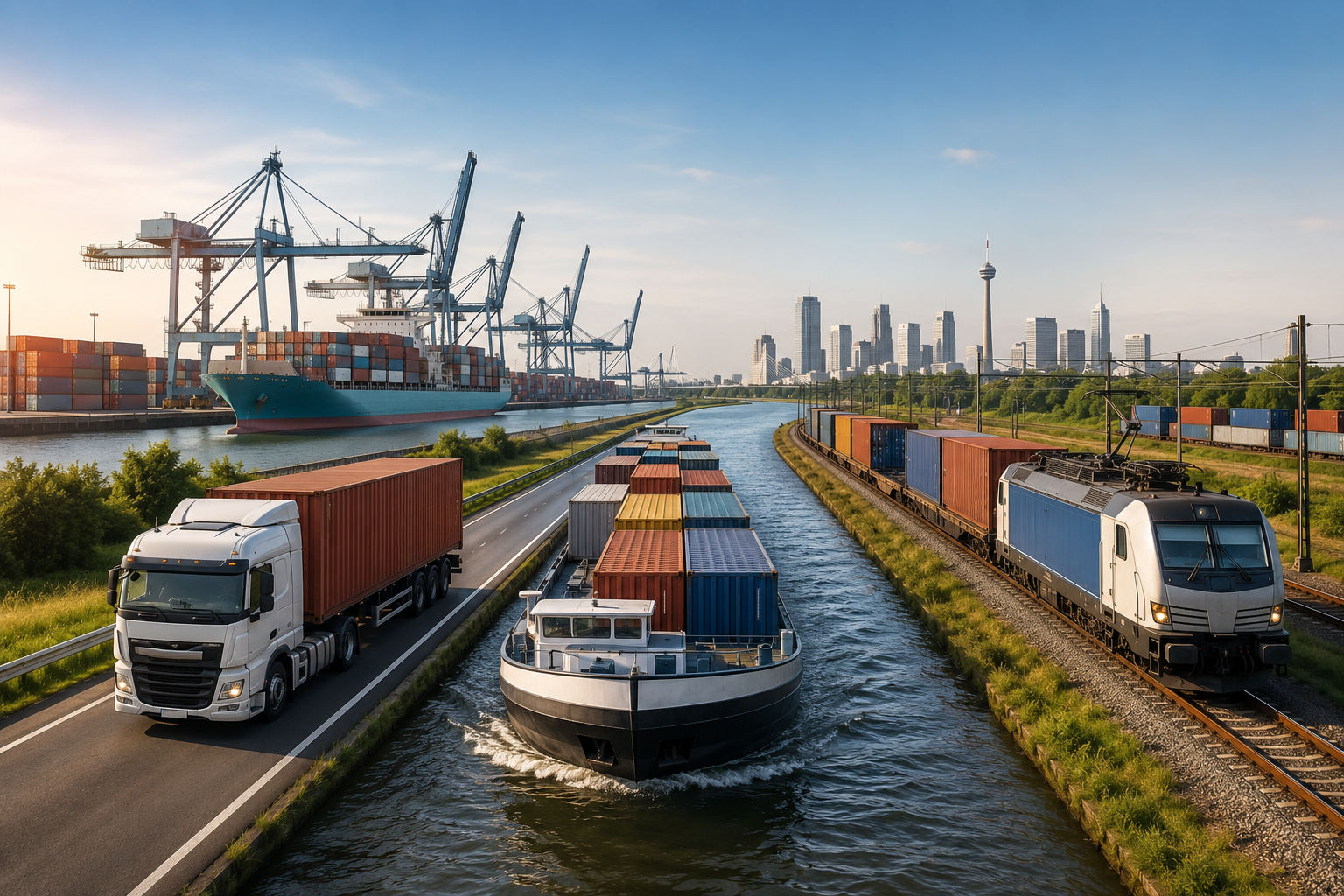
From 1 July 2026, companies importing or exporting containers via the ports of Rotterdam and Antwerp may see an increase in their road transport costs. The reason? The introduction of the Dutch truck toll. While this new system will impact the cost of road transport, it also presents an opportunity to reassess your logistics strategy. Is road transport still the most efficient option, or could a combination of inland shipping, rail and road transport offer a better solution?
The Netherlands Introduces a Pay-Per-Use Truck Toll System
On 1 July 2026, the Netherlands will introduce a truck toll based on the number of kilometres driven. With this change, the Netherlands joins countries such as Germany, Belgium and Denmark, where similar road charging systems have been in place for several years.
The truck toll applies to both Dutch and foreign-registered trucks in the N2 and N3 vehicle categories (vehicles with a maximum authorised mass exceeding 3.5 tonnes). The toll applies to almost all motorways and selected provincial and municipal roads.
The amount payable depends on three factors:
- The number of kilometres driven
- The weight of the vehicle
- The vehicle's CO₂ emissions
The cleaner and lighter the vehicle, the lower the toll per kilometre. This system has been introduced to encourage more sustainable road transport and reduce CO₂ emissions.
At the same time, the Dutch Eurovignette will be abolished, while the Dutch motor vehicle tax for trucks will be reduced or abolished depending on the vehicle's weight.
Truck Toll at a Glance
| Effective date | 1 July 2026 |
| Applies to | Trucks over 3.5 tonnes (N2 & N3) |
| Road network | Almost all motorways and selected provincial and municipal roads |
| Toll based on | Distance travelled, vehicle weight and CO₂ emissions |
| Impact for shippers | Higher road transport costs |
| Possible alternatives | Inland shipping, rail transport and multimodal logistics |
What Does This Mean for Your Container Logistics?
Although the truck toll is paid by the carrier, the additional costs will inevitably be reflected in transport rates. For companies importing or exporting containers via the ports of Rotterdam and Antwerp, this may result in higher logistics costs. This applies not only to long-distance transport, but also to pre-carriage and on-carriage movements between ports, inland terminals, warehouses and distribution centres. This makes it the perfect time to review your existing transport flows.
Instead of asking:
"How much will the truck toll cost?"
A better question is:
"How can we optimise our supply chain?"
Is Road Transport Still the Best Option?
Road transport remains an essential part of container logistics. For many destinations, it continues to be the fastest and most flexible transport mode. However, not every container needs to travel entirely by road. With the introduction of the truck toll, a multimodal transport solution becomes increasingly attractive. Combining road transport with inland shipping or rail can often improve efficiency while reducing costs.
At Akomar, we evaluate the most suitable transport solution for every container flow. In some cases, road transport remains the best choice. In others, combining road, inland waterway and rail transport creates a more efficient and cost-effective logistics solution. As road transport costs continue to rise, making the right modal choice becomes increasingly important.
Inland Waterway Transport: An Efficient Alternative
For many import and export shipments, inland waterway transport offers an attractive alternative. Instead of transporting containers entirely by truck, they can be moved by barge between the seaport and an inland terminal. Only the first or last part of the journey is then completed by road.
Depending on the shipment, this can offer several advantages:
- Fewer truck kilometres
- Less exposure to road congestion
- Lower CO₂ emissions
- Efficient handling of larger container volumes
- A more sustainable logistics solution
For companies with regular container flows, inland shipping can significantly reduce the impact of the new truck toll.
Rail Transport as an Alternative
Rail freight is also becoming an increasingly attractive option within container logistics. For larger volumes, longer distances or recurring transport flows, rail transport can offer an efficient and reliable solution. Containers are transported to or from an inland rail terminal by train, with only the final leg completed by truck. This reduces the number of road kilometres while creating a balanced multimodal transport solution.
Practical Example
Imagine your company transports several containers every week from the Port of Rotterdam to the south of the Netherlands. Traditionally, the entire journey may have been completed by truck. By moving part of the route via an inland terminal using barge transport and completing only the final leg by road, the total number of truck kilometres can be significantly reduced. The most suitable solution depends on factors such as shipment volume, transit time, destination, planning requirements and terminal availability. That is why every logistics solution should be tailored to the customer's supply chain.
Four Ways to Reduce the Impact of the Truck Toll
Although the introduction of the truck toll creates an additional cost, there are several ways to minimise its impact.
1. Consider Multimodal Transport
Not every container needs to travel entirely by road. Inland shipping or rail may offer a more efficient solution for part of the journey.
2. Reduce Empty Truck Movements
Careful planning of import and export flows helps minimise unnecessary road kilometres and improves vehicle utilisation.
3. Consolidate Container Flows
Combining shipments increases transport efficiency and lowers the logistics cost per container.
4. Review Your Supply Chain
The introduction of the truck toll is an excellent opportunity to reassess existing transport routes, terminal choices and logistics processes.
Even relatively small adjustments can result in significant cost savings over time.
Turning Additional Costs into New Opportunities
The Dutch truck toll will undoubtedly affect companies relying on road transport. However, it also provides an opportunity to optimise logistics processes and make supply chains more resilient. Rather than automatically choosing a single transport mode, more companies are evaluating the best combination of road, inland waterway and rail transport for each individual shipment. The result is often a more efficient, sustainable and future-proof logistics solution.
How Can Akomar Support Your Logistics?
Container logistics is about much more than simply transporting cargo from A to B. It is about making the right decisions throughout your entire supply chain. At Akomar, we support businesses every day with container transport to and from the ports of Rotterdam and Antwerp. We look beyond road transport alone and advise on the most efficient combination of road, inland waterway, rail and multimodal transport to ensure your container flows are reliable, cost-effective and future-proof.
If your business regularly ships containers to or from the ports of Rotterdam or Antwerp, now is the ideal time to review your logistics strategy. Your current transport solution may still be the best option, but there may also be opportunities to reduce costs and improve efficiency by making smarter use of inland shipping, rail transport or a multimodal solution.
Our logistics specialists are happy to help you find the solution that best fits your supply chain.