
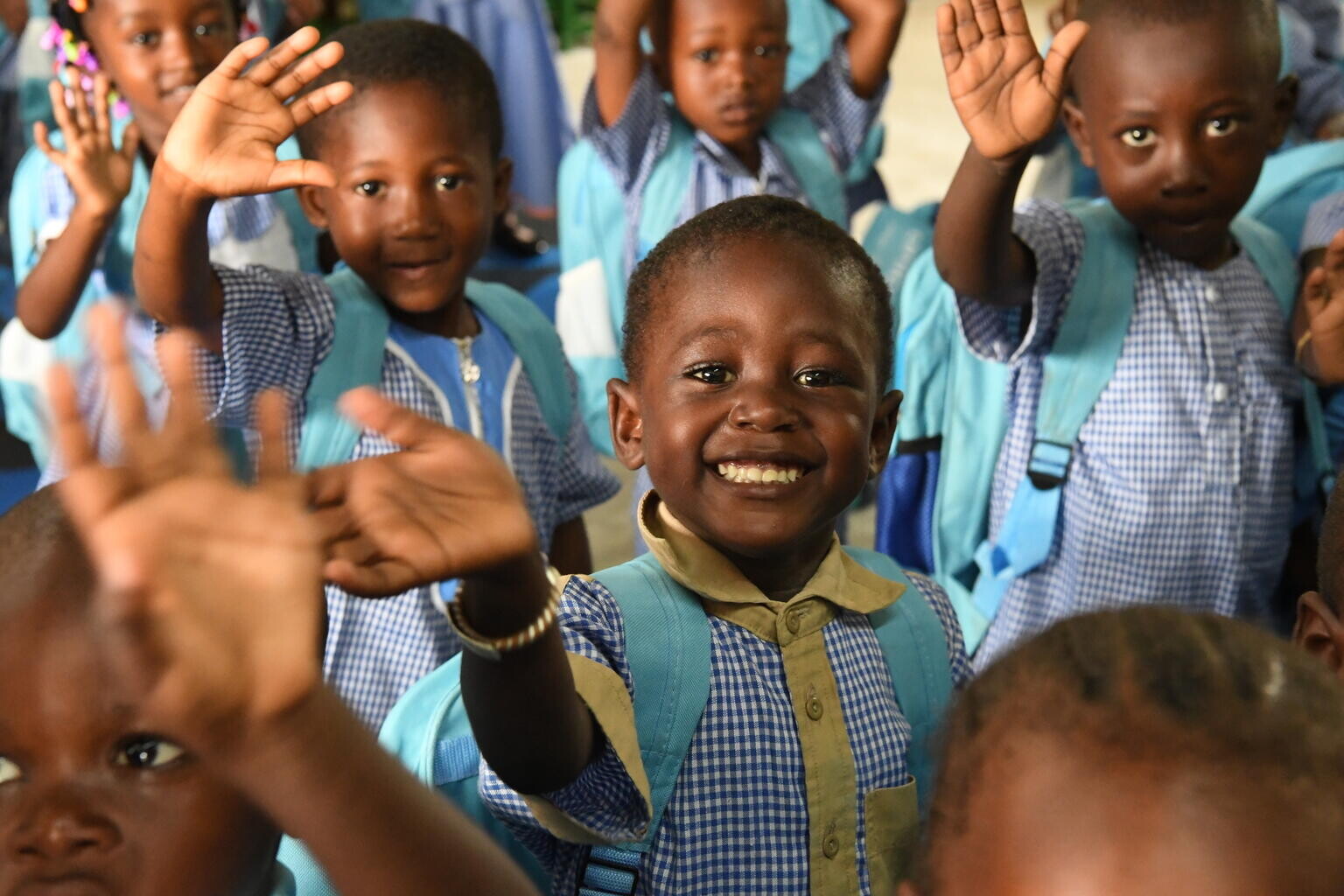
From plastic waste to a place to learn
A safe place to learn. Clean drinking water. The opportunity to grow and develop. Every child should have access to these essentials. Yet for many children, they remain out of reach.
Akomar has been a proud UNICEF Business Buddy for several years. Together with other businesses and donors, we support programmes that give children better opportunities.
The latest updates from Côte d’Ivoire and Madagascar show the progress being made. They also highlight how much work still lies ahead.
Côte d’Ivoire: giving plastic waste a new purpose
Côte d’Ivoire faces two major challenges: large amounts of plastic waste and a shortage of suitable educational facilities. According to UNICEF’s progress report, 2.3 million children and young people are still out of school.
Through the Plastic Bricks programme, plastic waste is transformed into building blocks for classrooms. This gives waste a new purpose while providing children with a safe place to learn. The programme also creates employment opportunities and contributes to a cleaner environment.
Since 2019, a total of 519 classrooms have been built using recycled plastic. Four new classrooms were completed in the past six months. In addition, twelve existing classrooms built with conventional materials were renovated.
These are practical steps towards better learning and teaching conditions.
Plastic Bricks 2.0: the next step
Following the success of the first phase, Plastic Bricks 2.0 launched in 2026. The ambitions for 2026–2030 are substantial:
-
Build 900 new classrooms using recycled plastic.
-
Produce 3,000 school desks from plastic waste.
-
Introduce Digiboxes to support digital education in remote villages.
-
Train teachers to improve the quality of education.
Through this approach, UNICEF aims to give 45,000 children access to quality education.
To accelerate construction, a new delivery model is being prepared. The factory partner will take responsibility for the entire process, from recycling plastic waste to delivering fully furnished classrooms. UNICEF expects this approach to enable faster classroom construction from late 2026 onwards.
Meanwhile, approximately 750 school desks made from recycled plastic have entered production.
Quality education takes more than a classroom
A school building matters. So do well-trained teachers and suitable learning materials.
With support from Dutch donors, UNICEF has trained more than 17,000 teachers since 2019. Solutions are also being developed for children in remote communities where there are too few pupils to establish a school.
Through the travelling teachers initiative, teachers reach these villages by motorcycle. Over the past six months, 28 teachers and volunteers have been trained, giving 436 children access to education.
Four Digiboxes have also been purchased. These mobile digital classrooms give children access to learning materials and opportunities to develop digital skills, even in areas without internet access or electricity.
This approach shows why education needs to be adapted to the circumstances in which children live.
Madagascar: clean drinking water and opportunities for local entrepreneurs
There are also updates from Madagascar, where UNICEF is working to improve access to safe drinking water through an approach that creates opportunities for local entrepreneurs.
One of the goals is to sell at least 15,000 jerrycans of clean drinking water by the end of 2028.
By combining access to safe drinking water with local entrepreneurship, the programme supports both children’s health and the development of their communities.
Why Akomar remains committed
As a business, we are part of a world that extends beyond our day-to-day operations. That is why we believe it is important to contribute to children’s futures.
UNICEF’s reports provide insight into progress: what has been achieved, what is being developed and what the ambitions are for the years ahead.
These results are made possible through the collective support of donors and partners. As a Business Buddy, we are proud that Akomar contributes to this work.
Get involved
We invite businesses in our network to explore UNICEF Business Buddies. By supporting UNICEF as a business, you help make programmes possible that give children access to education, clean drinking water and better opportunities for the future.
You can also contribute in other ways, for example by making a donation or organising a fundraising initiative with colleagues.
Would you like to learn more about Business Buddies and the programmes in Côte d’Ivoire and Madagascar?
Explore the opportunities on UNICEF’s website.
We will continue to follow these programmes with interest and share their progress with our network.
Akomar — proud UNICEF Business Buddy.
Source: UNICEF’s Côte d’Ivoire progress report, September 2026, and the shared programme update on Madagascar.